
Repiping is one of the most significant plumbing jobs a home can need — and one of the most consequential to get right. If your house still has polybutylene supply lines, galvanized steel from a pre-1970 build, or copper that’s developing pinholes, you’re no longer dealing with isolated failures. You’re dealing with a system that’s failing throughout. MQ Plumbing handles whole-home repiping for residential properties across Mint Hill, Charlotte, and the surrounding metro — permits pulled, inspections scheduled, work done start to finish.
Polybutylene (gray plastic pipe)
Polybutylene was installed in hundreds of thousands of homes across the Charlotte metro between roughly 1978 and 1995. It was fast and inexpensive to install — and it fails, often without warning. The pipe degrades when it reacts with chlorine and oxidants in treated municipal water. The fittings fail first. If your home has polybutylene, it's not a question of if it will fail, only when. Most insurance carriers in NC and SC now require disclosure, and some won't renew coverage on homes with polybutylene still in service.
Galvanized Steel Pipe
Standard in homes built before the 1960s. The zinc coating that prevents rust wears off over decades, and the pipe corrodes from the inside out. The corrosion narrows the interior diameter, reducing water pressure throughout the house. You'll notice it as rust-colored water, low pressure at fixtures, or leaks at threaded joints. By the time symptoms appear, significant corrosion has already happened throughout the system.
Copper — Pinhole Leaks
Copper is generally excellent pipe and can last 50+ years under good conditions. But in certain soil and water chemistry conditions present in parts of the Charlotte area, copper develops pinhole leaks — small, scattered failures that occur at multiple points simultaneously. If you've had two or three pinhole leak repairs in the past few years, patching individual failures no longer makes sense. The whole system is affected.
What Material Do We Repair With?
For most residential repiping, we use PEX (cross-linked polyethylene). PEX has become the standard for new residential construction because it’s flexible — fewer fittings, fewer potential failure points — resistant to freeze damage, compatible with modern water chemistry, and significantly less expensive than copper for a whole-home job.
For clients who want copper, or where copper is required by code or HOA, we install copper. We’ll give you a straight comparison of cost and long-term performance for your specific situation so you can make the right call.
Not sure which fits your situation?
Call us and we'll walk through it — no obligation, no sales pitch.
Permits Pulled on Every Install
5★ Rated on Google
Serving Charlotte Metro Since 2021
Licensed, Bonded & Insured
Upfront Written Pricing
Same-Day Service Available
Homes in Union County and eastern Mecklenburg County built before 2000 are the most likely candidates for polybutylene replacement. Mint Hill, Matthews, Waxhaw, and Pineville all have significant housing stock from that era. If you’ve bought a home in the last few years and haven’t confirmed the pipe material, it’s worth checking — your home inspector may have noted it, but not all inspectors call it out clearly.
What Our Clients in Charlotte Are Saying
 Posted on Google
 Laura Kansburg
Trustindex verifies that the original source of the review is Google.
MQ Plumbing is truly the best out there . Plumbers who came were professional and did a great job to replace the water heater . Everything was left clean and tidy afterwards. They were polite, wore shoe covers to protect my floor, and explained the pricing upfront . Price was reasonable Highly recommended.Posted on Google Brian ChaffinVery helpful with water pressure issuePosted on Google
 Brent GildbergMax and his crew did an excellent job replacing my water heater. It was in tight quarters and they protected walls and flooring. The installation of the piping was nice and clean. They did a good job of cleaning up when they were finished.Posted on Google
 Olivia BradyMax is the best! Highly recommendPosted on Google
 Dan BlackMax and Peter at MQ Plumbing are the real deal! Extremely knowledgeable, professional, and on time from start to finish. They quickly addressed the issue, explained everything clearly, and delivered top quality work at a very reasonable price. Honest, reliable, and skilled, hard to find service like this nowadays! They had my basement sump pump up and running in less than half an hour. I highly recommend MQ Plumbing.Posted on Google
 Rama Narayan Raju UddarajuWe recently completed our basement project and hired MQ Plumbing for our full bathroom and whole-house water filtration system, and they did an outstanding job. The bathroom turned out beautiful with amazing attention to detail and high-quality workmanship. Our family is extremely happy with the final result. The whole-house Aquasana filtration system was also installed very neatly and professionally with a super clean and organized piping layout. Max was one of the best contractors we worked with during this project. He is professional, patient, and truly listens to every detail before starting the work. Unlike some contractors who become less responsive once the project begins, Max stayed responsive throughout and even came back twice after completion to make sure there were no leaks and that we were fully satisfied. You can clearly see that he takes pride in his work and cares about customer satisfaction. I would highly recommend MQ Plumbing and would definitely call Max again for any future plumbing needs.Posted on Google
 Joseph DominguezMax and his team did an amazing job installing a tankless water heater in my home. Their work was professional, well-explained and came at a very reasonable price.Posted on Google
 T GMax was a great communicator and helped fixed a pressure valve. He raised the issue with us and explained to us the impact of not fixing. He was very professional and reasonable. Highly recommend his services!Posted on Google
 Colton HoustonMax is very professional, friendly and knowledgeable. He did a great job with all the plumbing work in our new build and was happy to help with additional changes and upgrades we requested. Everything from start to finish was precise and quality work. Would definitely recommend him for your new home plumbing work.
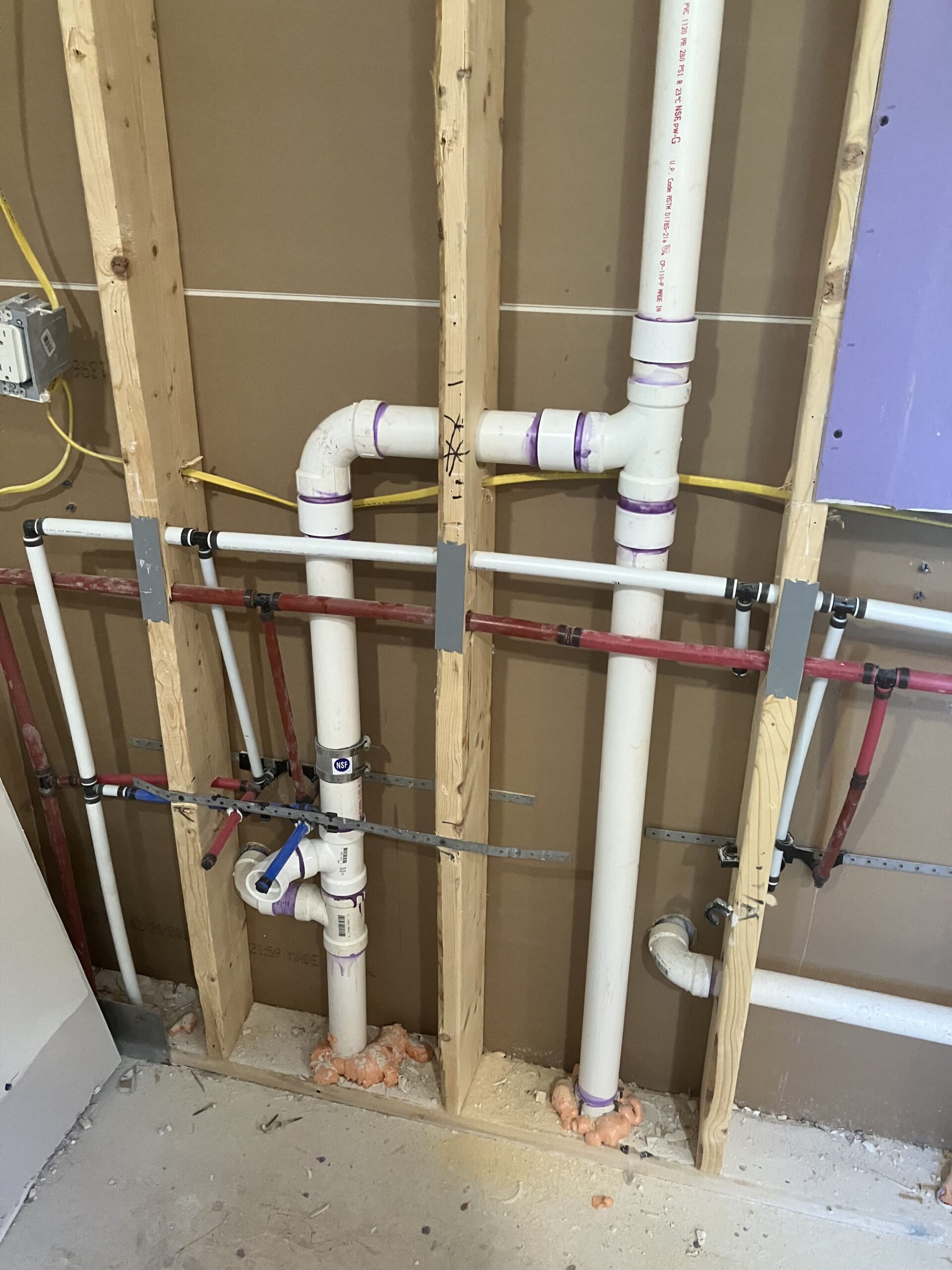
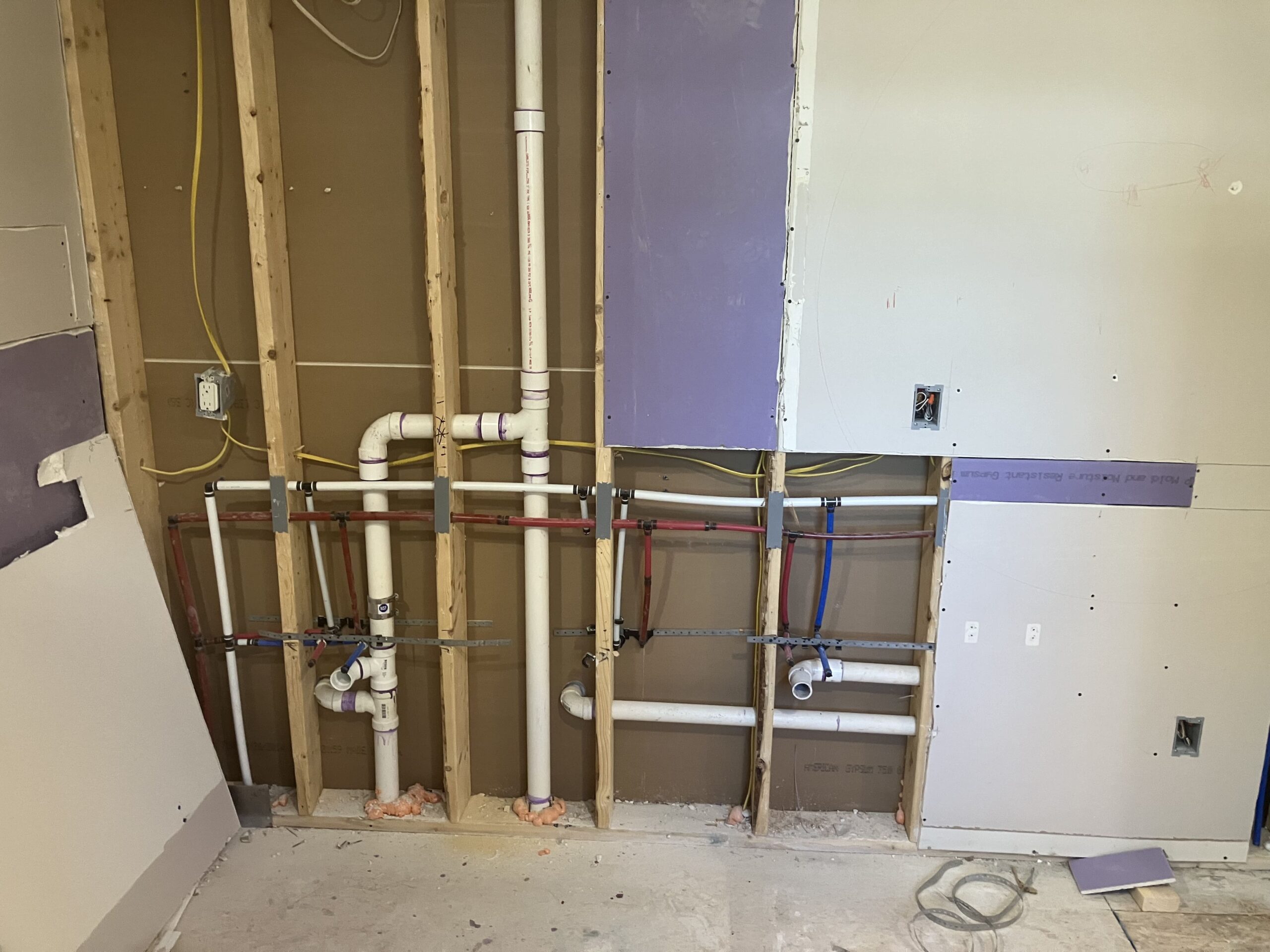
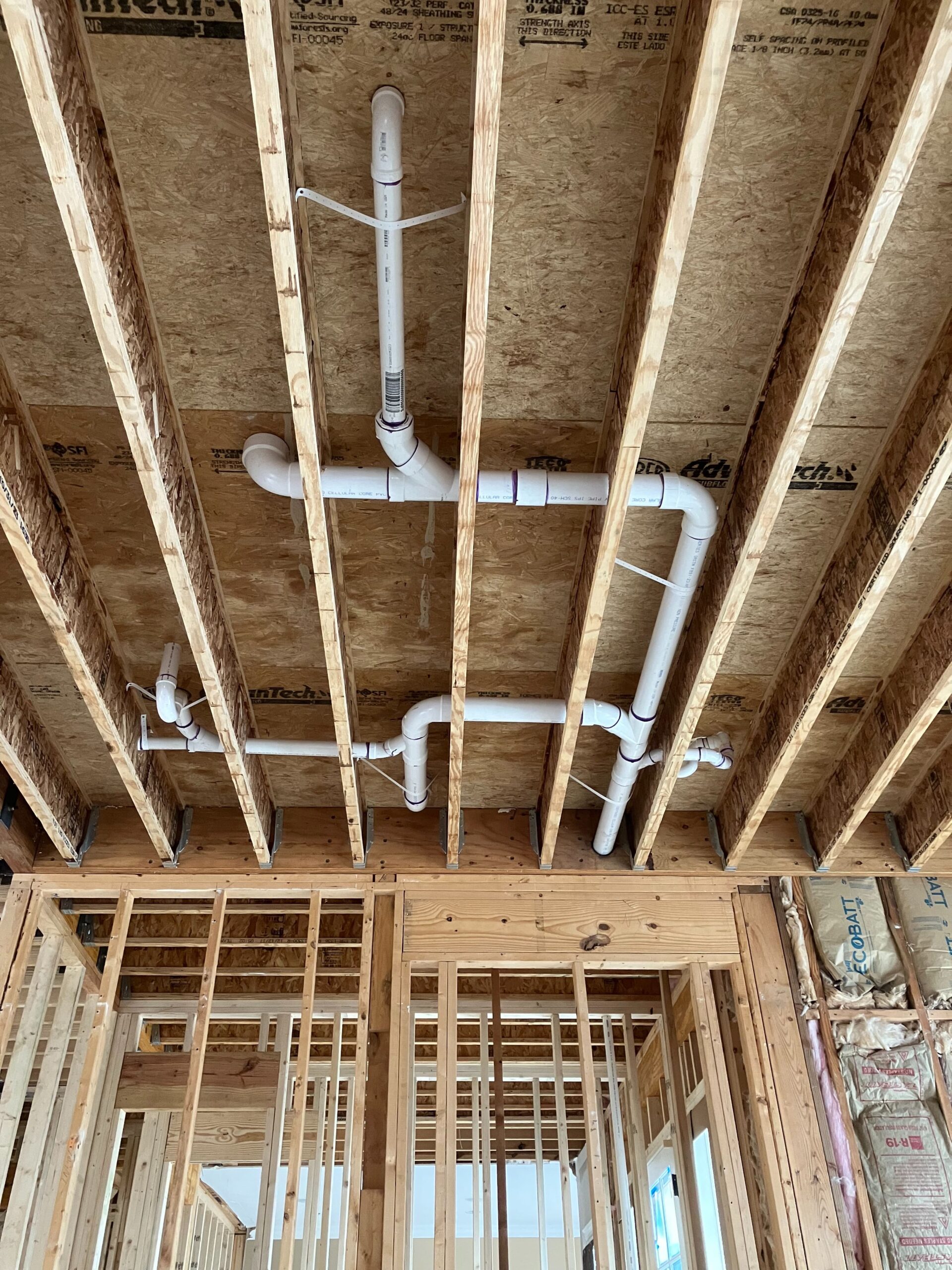
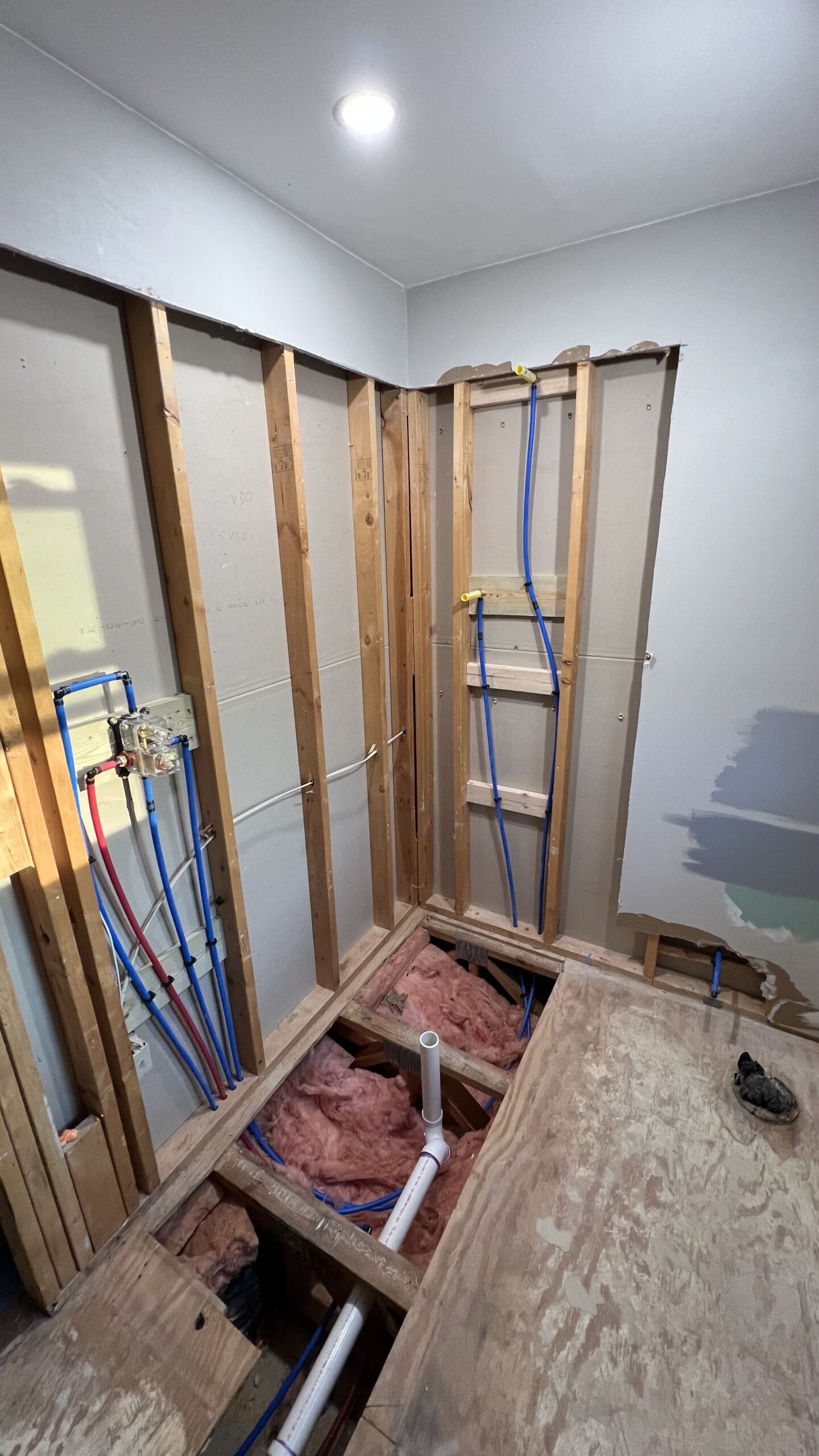
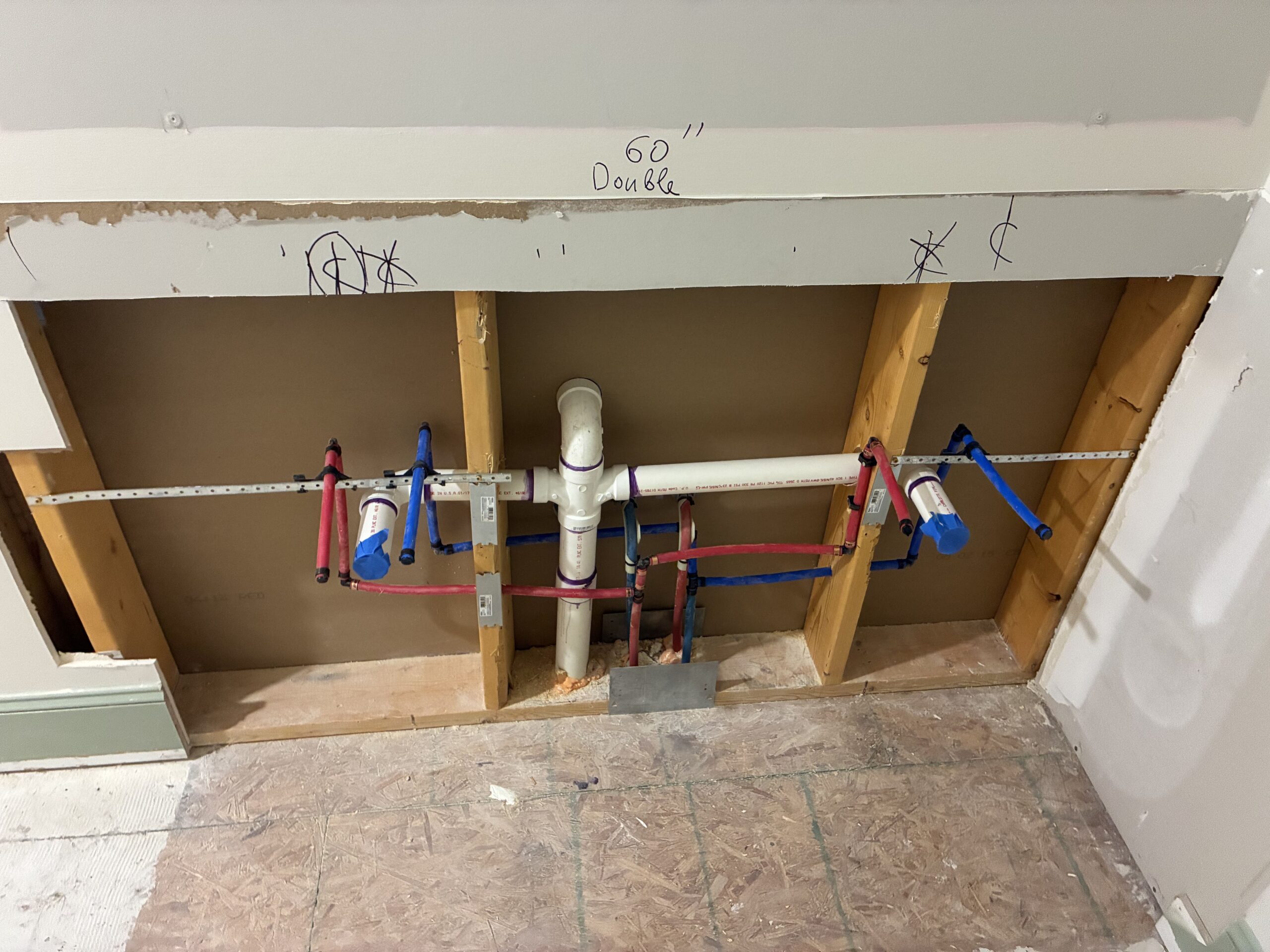
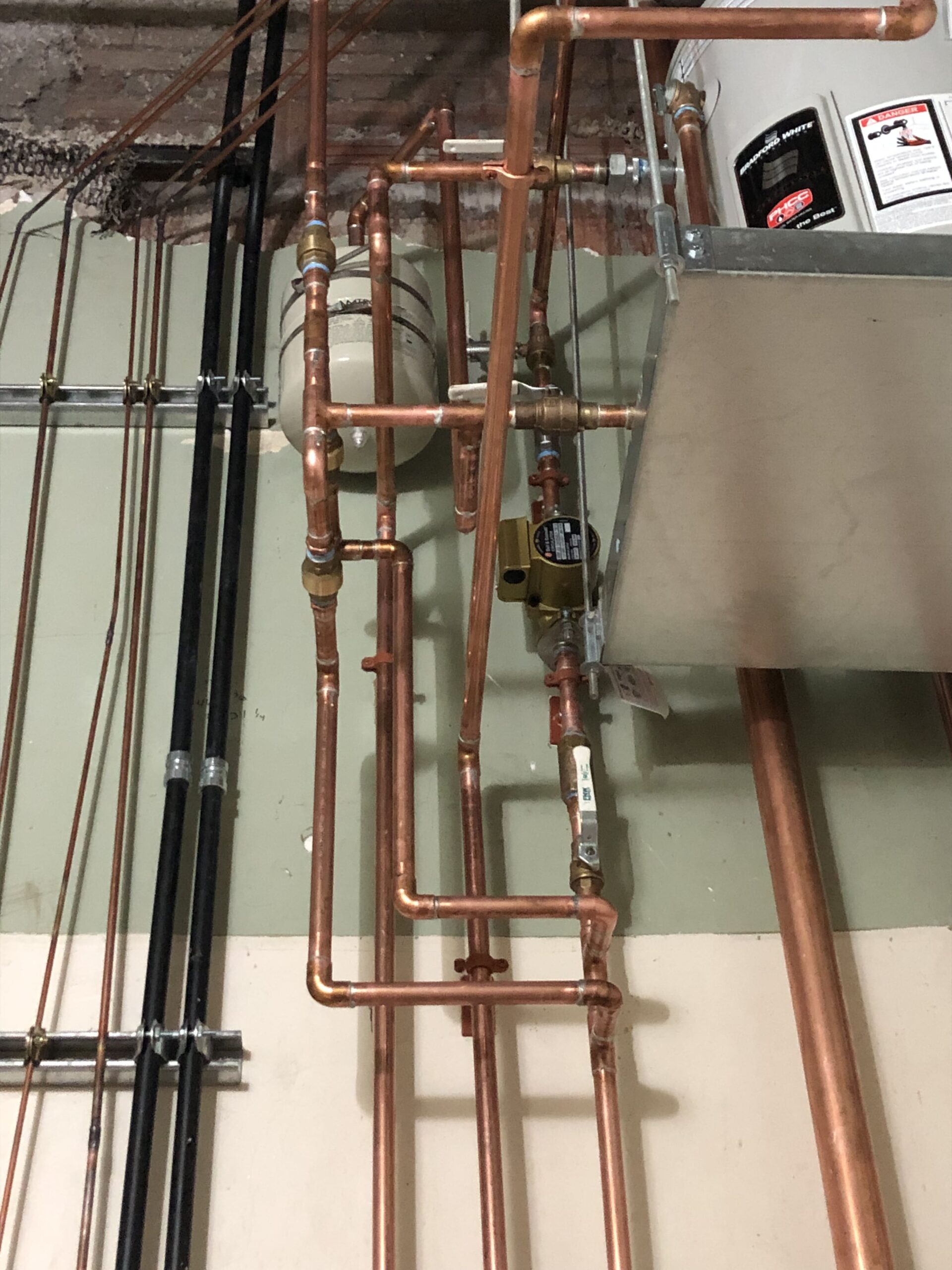
Day 1–2 — Supply line rough-in
We run all new supply lines through the walls. This requires small access holes at each fixture location. Water is off during working hours and restored each evening — you have water overnight throughout the project.
Inspection
The rough-in is inspected before walls close. We schedule this, coordinate with the inspector, and make sure it passes. This is non-negotiable — it's how the work gets on record and protects you at closing.
Wall patching
We patch the access holes we opened. The patches are clean and functional, but finish-ready drywall work is outside a plumber's scope. Plan to have a painter or drywall contractor follow up if you want a seamless surface. Most homeowners use this as an opportunity to repaint anyway.
Final connections and testing
All fixtures, valves, and appliances are reconnected. We run the system and check every connection before we leave.