

Request a Call Back
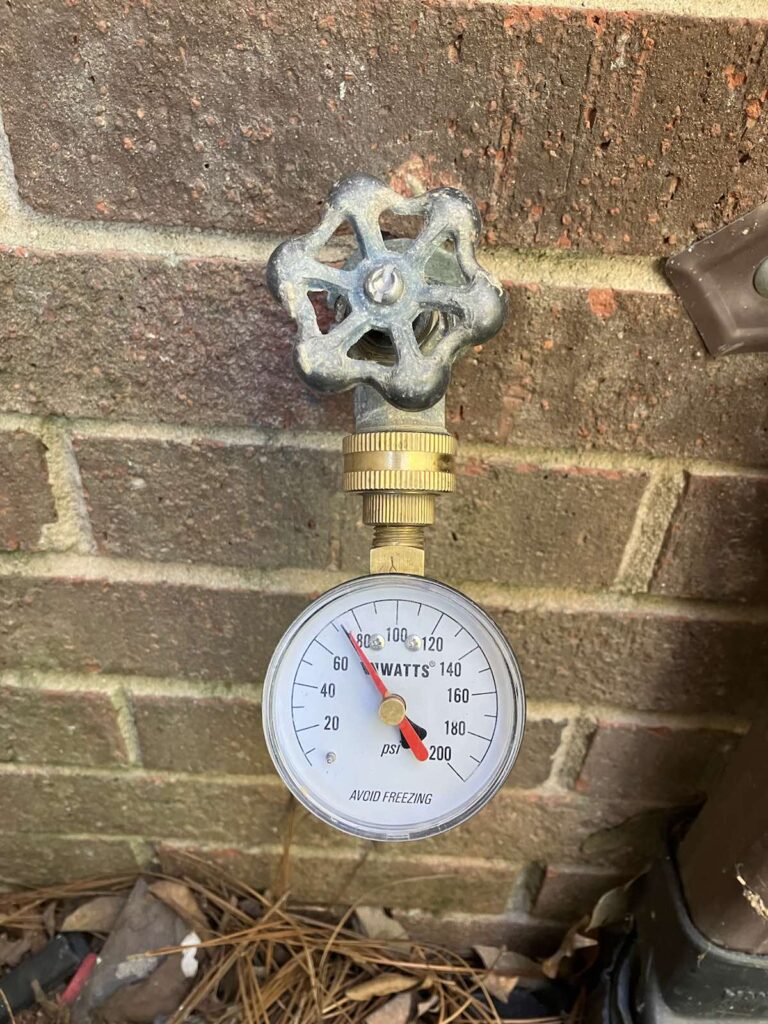
Water pressure that’s too low is frustrating — weak showers, slow-filling appliances, inadequate flow at multiple fixtures. But water pressure that’s too high is a silent threat, quietly stressing every supply line, fixture seal, and appliance connection in your home until something fails. Both problems are fixable. We diagnose, explain, and repair water pressure issues in Mint Hill and Charlotte with same-day service available.
Normal vs. Problem Pressure
Residential water pressure should run between 40–80 PSI. Below 40 PSI, you’ll notice real functional issues at fixtures. Above 80 PSI, your plumbing system is under chronic stress. Most Charlotte-area homes connected to municipal water receive supply at 60–100 PSI — which means many homes are operating above safe range without knowing it.
Causes of Low Water Pressure
- Partially closed main shut-off or meter valve
- Pressure reducing valve (PRV) failing or set too low
- Mineral buildup inside older galvanized pipes restricting flow
- Water line leak reducing supply pressure
- Municipal supply issue affecting the neighborhood
- Well pump or pressure tank issues (for properties on well water)
Causes of High Water Pressure
- No pressure reducing valve installed — or PRV has failed
- Municipal supply fluctuations during low-demand hours (often 2–4am)
- Thermal expansion in a closed plumbing system
The Fix: Pressure Reducing Valve
A pressure reducing valve (PRV) is a relatively simple device installed on the main supply line that automatically regulates incoming pressure to a safe, consistent level. If your home doesn’t have one, or if your existing PRV has failed, this is the standard solution for high pressure. Properly set, a PRV protects every pipe, fixture, and appliance in your home from the gradual wear of excessive pressure.
We test your current pressure on arrival, diagnose the cause, and give you a clear recommendation before any work begins. If the fix is a PRV replacement or adjustment, most jobs are completed in a single visit.